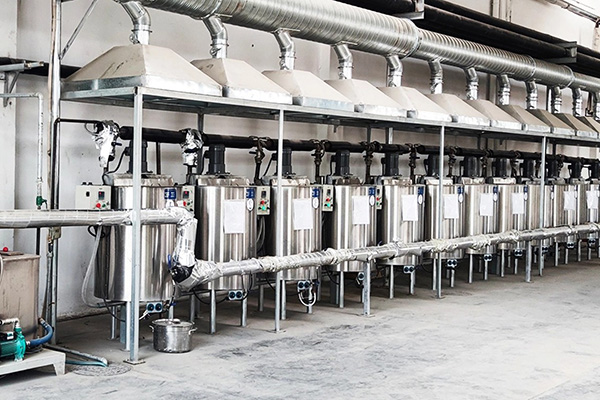
In modern industrial manufacturing, efficiency is no longer defined solely by speed. It is measured by consistency, resource utilization, quality stability, and the ability to scale without increasing operational risks. Across industries such as candle production, cosmetics, rubber compounding, packaging, coatings, and specialty chemicals, wax remains a critical raw material. However, handling wax manually or with outdated systems often leads to uneven melting, temperature fluctuations, contamination, and excessive labor costs.
A Wax Processing Machine addresses these challenges by integrating precise temperature control, automated feeding, homogeneous mixing, and controlled output into a single production system. At Jar Hing Products Co., Ltd., we have spent years refining our equipment based on real-world factory requirements. Our experience shows that the right Wax Processing Machine does not merely replace manual labor. It restructures the entire workflow to reduce waste, shorten cycle times, and ensure repeatable quality.
A Wax Processing Machine is a specialized piece of industrial equipment designed to transform solid wax materials into a stable, usable, and precisely controlled liquid state for downstream manufacturing processes. In industrial manufacturing, wax is rarely a simple auxiliary material. It often plays a functional role in shaping, coating, binding, lubricating, sealing, or protecting final products. Because of this, the way wax is processed directly affects efficiency, consistency, and overall production reliability.
From our long-term manufacturing experience, it is clear that treating wax processing as a standalone, loosely managed step creates bottlenecks across the entire production line. At Jar Hing Products Co., Ltd., we approach wax processing as an integrated system rather than an isolated operation. Our factory designs each Wax Processing Machine to function as a stable upstream foundation that supports continuous, high-efficiency industrial manufacturing.
Wax is used across a wide range of industrial sectors, including candle production, cosmetics, packaging, rubber processing, coatings, electronics encapsulation, and specialty chemical manufacturing. Each application places different demands on wax properties such as melting point, viscosity, thermal stability, and purity.
In industrial manufacturing environments, raw wax typically arrives in solid blocks, granules, or slabs. Before it can be used, it must be melted uniformly, maintained at a specific temperature, and often blended with additives. Without a dedicated Wax Processing Machine, these steps are frequently handled using improvised tanks or manual heating methods, which introduce variability and inefficiency.
Our factory experience shows that inconsistent wax preparation leads to downstream problems such as uneven coating thickness, unstable molding results, inconsistent product appearance, and increased defect rates. A professionally engineered Wax Processing Machine eliminates these risks by standardizing wax preparation before it enters the main production flow.
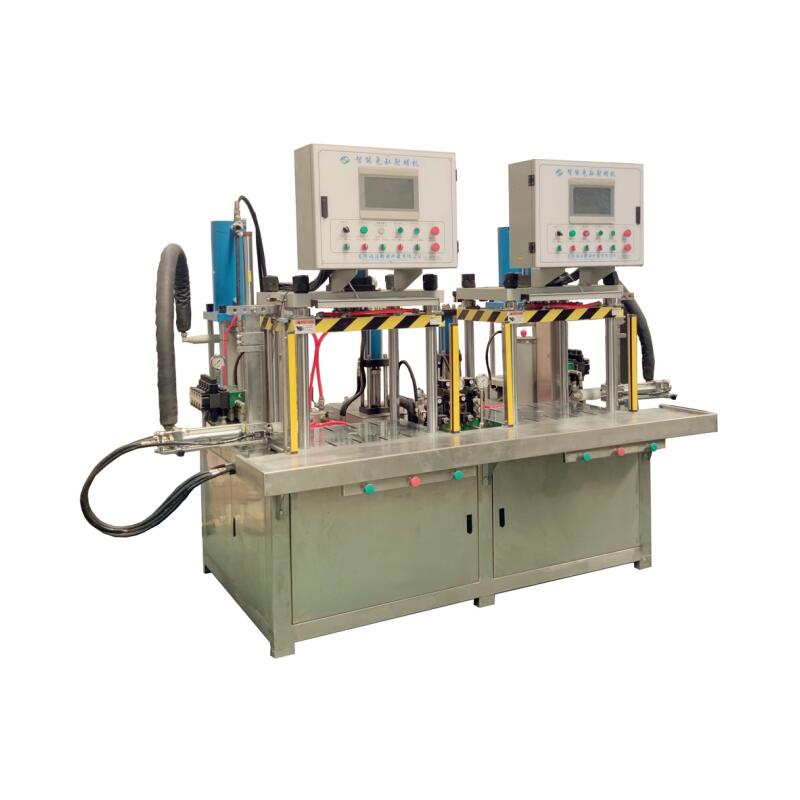
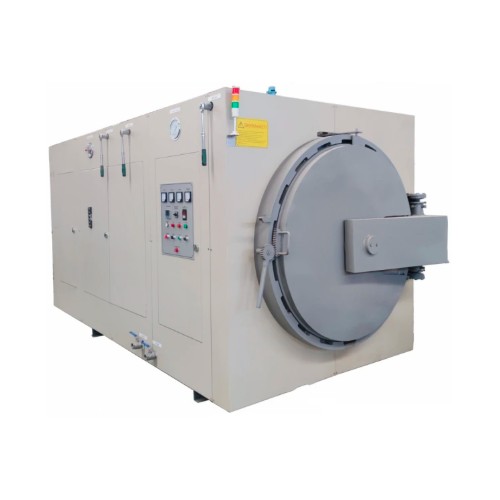
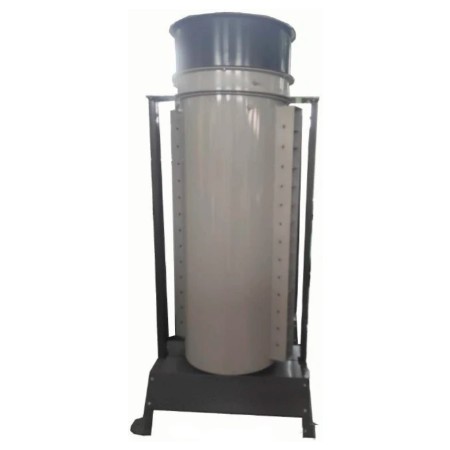
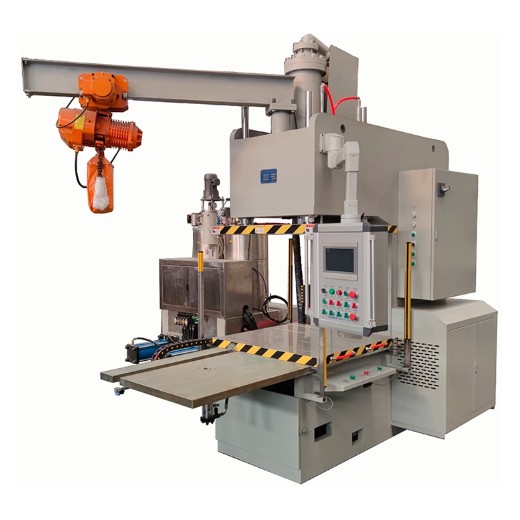
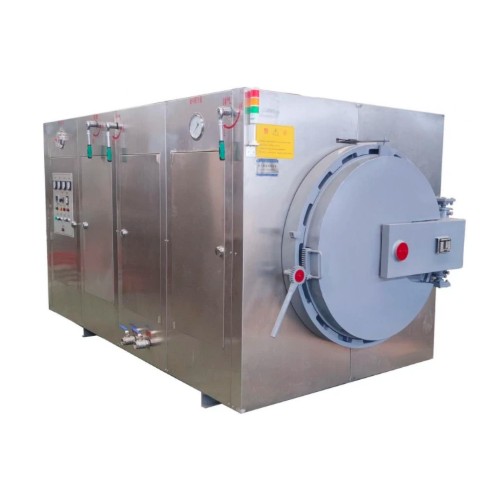
A modern Wax Processing Machine consists of multiple functional modules working together as a unified system. Each module is designed to address a specific technical challenge associated with wax handling in industrial manufacturing.
The melting chamber is the core of the system. It is engineered to apply heat evenly across the wax mass, preventing localized overheating or thermal degradation. In our factory designs, heating elements are distributed to maximize surface contact while maintaining controlled heat transfer rates. This ensures that wax transitions smoothly from solid to liquid without compromising material integrity.
Efficient insulation is essential for energy conservation and temperature stability. A Wax Processing Machine with high-quality insulation minimizes heat loss to the surrounding environment. Our factory emphasizes insulation materials that maintain performance over long operating cycles, supporting continuous production without excessive energy input.
Precise temperature control distinguishes industrial-grade equipment from basic melting tanks. Advanced sensors continuously monitor wax temperature at multiple points within the system. Automated controllers adjust heating output in real time, ensuring stable processing conditions even during extended operation. This level of control is critical for manufacturers working with temperature-sensitive wax formulations.
Uniform mixing is necessary when wax is combined with additives such as colorants, fragrances, stabilizers, or functional compounds. A Wax Processing Machine integrates slow-speed or variable-speed agitators that maintain homogeneity without introducing air bubbles or mechanical stress. Our factory designs mixing systems to match the viscosity characteristics of different wax types.
Before wax enters downstream processes, filtration removes solid impurities that could affect product quality or damage equipment. Controlled discharge mechanisms regulate flow rate and pressure, ensuring compatibility with filling machines, coating systems, or molding equipment. This controlled output is essential for synchronized industrial manufacturing lines.
Understanding how a Wax Processing Machine functions within an industrial manufacturing environment requires examining the complete operational cycle. Each step is designed to reduce manual intervention while maximizing consistency and throughput.
Solid wax is loaded into the melting chamber in bulk form. Our factory designs systems that support safe and efficient loading, reducing labor intensity and handling risks.
Heat is applied gradually and evenly. Temperature sensors continuously monitor conditions, preventing overheating and ensuring uniform melting throughout the wax mass.
Once melted, the wax is gently agitated to achieve consistent texture and composition. If additives are required, they are introduced at controlled stages to ensure complete dispersion.
The system maintains wax at the target processing temperature, ready for immediate use. This eliminates repeated heating and cooling cycles that waste energy and degrade material quality.
Processed wax is delivered through filtration units and discharged at a stable flow rate, synchronized with downstream production equipment.
The performance of a Wax Processing Machine is defined by its technical specifications. These parameters determine whether the equipment can support industrial-scale manufacturing reliably.
| Batch or Continuous Capacity | Flexible design supporting small to large volume production |
| Heating Control Accuracy | Maintains stable temperature under variable load conditions |
| Mixing Configuration | Optimized for low shear and uniform dispersion |
| Material Compatibility | Supports paraffin, microcrystalline, natural and specialty waxes |
| Operational Mode | Manual assisted or fully automated integration |
At Jar Hing Products Co., Ltd., these parameters are not treated as fixed values. Our factory customizes each Wax Processing Machine based on the client’s production environment, material characteristics, and long-term operational goals.
Industrial manufacturing depends on predictability. When wax processing is inconsistent, every downstream process becomes harder to control. A dedicated Wax Processing Machine eliminates this uncertainty by standardizing one of the most critical upstream steps.
From our factory perspective, the true value of a Wax Processing Machine lies in its ability to transform wax from a variable raw material into a controlled production input. This shift improves scheduling accuracy, reduces rework, and supports scalable growth.
By integrating melting, mixing, temperature control, and delivery into a single system, manufacturers gain tighter control over both quality and efficiency. Jar Hing Products Co., Ltd. continues to refine these systems based on real industrial manufacturing demands, ensuring that our factory solutions deliver reliable performance over the entire equipment lifecycle.
In industrial manufacturing, material handling and energy consumption are two interdependent factors that directly influence production costs, operational stability, and scalability. Wax, by nature, presents unique challenges. It changes physical state with temperature, requires controlled handling to avoid contamination, and consumes significant energy during repeated heating cycles. Without a systematic approach, these characteristics quickly turn wax processing into a hidden efficiency drain.
A Wax Processing Machine is designed specifically to address these challenges by centralizing wax handling and optimizing energy usage throughout the production cycle. At Jar Hing Products Co., Ltd., our factory experience shows that manufacturers who upgrade from fragmented or manual systems to an integrated Wax Processing Machine often achieve immediate improvements in both material utilization and energy efficiency.
Before examining optimization, it is important to understand the inefficiencies common in traditional wax handling methods. Many factories rely on basic melting pots, open tanks, or improvised heating solutions. While these approaches may function at a basic level, they introduce structural inefficiencies that scale poorly.
Solid wax blocks must be manually transported, loaded, and repositioned. Each handling step increases labor costs and the risk of spillage or contamination.
Wax is often reheated multiple times due to poor temperature retention. This not only wastes energy but can also degrade wax properties over time.
Moving melted wax between containers or machines leads to heat loss and uneven temperatures, making downstream processes harder to stabilize.
Open systems increase the likelihood of wax loss through residue buildup, leakage, or solidification in transfer lines.
From our factory perspective, these inefficiencies accumulate quickly. Even small losses per batch can translate into significant cost overruns at industrial scale. A Wax Processing Machine restructures this workflow to eliminate unnecessary handling steps.
One of the most impactful benefits of a Wax Processing Machine is the centralization of wax handling. Instead of moving wax between multiple stations, the entire preparation process occurs within a single, controlled system.
Solid wax can be loaded in larger quantities, reducing handling frequency. Our factory designs systems that accommodate different wax formats while maintaining operator safety.
A closed processing environment minimizes exposure to air and contaminants. This protects wax quality and reduces cleanup requirements.
Once melted, wax moves through insulated internal pathways rather than external containers. This preserves temperature stability and prevents material loss.
At Jar Hing Products Co., Ltd., we have observed that centralized handling not only improves efficiency but also simplifies production management. Our factory solutions reduce dependency on manual intervention, allowing operators to focus on higher-value tasks.
Energy consumption in wax processing is driven primarily by heating and temperature maintenance. A Wax Processing Machine optimizes energy usage by addressing both factors at a structural level rather than relying on operator adjustments.
Evenly distributed heating elements reduce the need for excessive temperature settings. Wax reaches the desired state faster and with less energy input.
Thermal insulation plays a critical role in maintaining stable temperatures. Our factory prioritizes insulation materials that reduce heat loss over long production cycles.
By maintaining wax at a stable processing temperature, a Wax Processing Machine eliminates repeated melting cycles that consume unnecessary energy.
Modern systems adjust heating output based on real-time demand rather than running at constant maximum power. This adaptive approach improves overall energy efficiency.
In our factory evaluations, energy optimization often produces measurable savings within the first production cycle. Jar Hing Products Co., Ltd. designs systems that balance performance with long-term operational cost control.
Material waste is not always obvious in wax-based manufacturing. Small amounts lost during transfer, cleaning, or solidification can significantly impact profitability over time. A Wax Processing Machine reduces these losses through controlled processing and precise delivery.
Smooth internal surfaces and optimized flow paths prevent wax from accumulating and solidifying in unwanted areas.
Stable discharge rates ensure that only the required amount of wax is delivered to downstream processes, reducing overuse.
Closed systems reduce wax exposure, simplifying cleaning and reducing material loss during maintenance.
From our factory perspective, waste reduction is as important as energy savings. Jar Hing Products Co., Ltd. integrates both objectives into every Wax Processing Machine design to support sustainable industrial manufacturing.
Material handling efficiency and energy optimization contribute directly to operational stability. When wax processing becomes predictable, production planning improves and unexpected downtime decreases.
As production volumes increase, inefficiencies that once seemed manageable become critical constraints. Manual handling does not scale efficiently, and uncontrolled energy consumption erodes margins. A Wax Processing Machine provides the structural foundation needed to scale production without proportional increases in labor or energy costs. At Jar Hing Products Co., Ltd., we design every system with scalability in mind. Our factory solutions ensure that material handling remains controlled and energy usage remains optimized as production demands grow.
By centralizing wax preparation, stabilizing temperatures, and reducing waste, a Wax Processing Machine transforms wax from a challenging raw material into a predictable production input. This transformation is essential for manufacturers seeking long-term efficiency and competitive advantage in industrial manufacturing.
In industrial manufacturing, product consistency and output quality are not optional targets. They are fundamental requirements that directly influence customer trust, regulatory compliance, and long-term brand value. Wax, as a temperature-sensitive and formulation-dependent material, amplifies the risks associated with manual or loosely controlled processing. Even minor fluctuations in temperature, viscosity, or mixing time can lead to visible and functional defects in finished products.
Automation within a Wax Processing Machine addresses these challenges by replacing variable human intervention with stable, repeatable, and measurable control logic. From our factory perspective at Jar Hing Products Co., Ltd., automation is not about removing human involvement entirely. It is about ensuring that critical processing variables remain consistent regardless of shift changes, production volume, or operator experience.
Before understanding how automation improves quality, it is important to identify the root causes of inconsistency in traditional wax processing methods. Many factories rely on operator judgment to manage heating, mixing, and timing. While experienced operators can achieve acceptable results, this approach introduces unavoidable variability.
Manual temperature adjustment often leads to overheating or insufficient melting. These fluctuations alter wax viscosity and can degrade sensitive formulations.
Inconsistent agitation speeds or mixing durations cause uneven distribution of additives, resulting in color variation, fragrance inconsistency, or functional performance issues.
Delays between melting, mixing, and discharge allow wax to cool unevenly, leading to partial solidification or viscosity changes.
Different operators may apply different process settings based on personal experience, creating batch-to-batch variation.
Our factory audits show that these inconsistencies often originate upstream, long before defects become visible in final products. A Wax Processing Machine with automation capabilities addresses these risks at their source.
Automation in a Wax Processing Machine focuses on controlling variables that have the greatest impact on wax quality. By standardizing these parameters, manufacturers achieve repeatable results across production cycles.
Sensors continuously monitor wax temperature at multiple points within the system. Automated controllers adjust heating output instantly, maintaining stable conditions even during extended operation.
Mixing speed and duration are predefined and repeatable. This ensures uniform additive dispersion regardless of batch size or wax type.
Each processing step follows a defined sequence, eliminating delays and ensuring wax remains within optimal processing windows.
Automated systems detect deviations and alert operators before quality is compromised. This proactive control protects both product quality and equipment integrity.
At Jar Hing Products Co., Ltd., our factory integrates automation logic based on real production data. Each Wax Processing Machine is designed to deliver predictable outcomes rather than relying on constant supervision.
The direct result of automated wax processing is improved product quality. This improvement manifests in multiple dimensions, depending on the application.
Consistent temperature and mixing ensure stable viscosity, melting point, and texture, which are critical for molding, coating, and filling operations.
Even distribution of pigments and additives results in consistent color and appearance across batches.
For applications such as sealing, encapsulation, or lubrication, consistent wax composition ensures predictable performance in end use.
Automation reduces human error, leading to fewer rejected products and less rework.
From our factory experience, manufacturers often underestimate how much quality variation originates from wax preparation. A Wax Processing Machine with automation significantly reduces these hidden quality risks.
Consistency and quality are closely linked to throughput. When quality is unstable, production slows due to rework, inspection, and corrective adjustments. Automation in wax processing stabilizes production flow, enabling higher throughput without sacrificing quality.
Automated systems support extended production runs with minimal interruption, maintaining consistent output over time.
Standardized processing steps allow manufacturers to plan production schedules accurately.
Stable processing conditions reduce equipment stress and unexpected stoppages.
Our factory evaluations show that throughput gains achieved through automation often exceed expectations. Jar Hing Products Co., Ltd. designs Wax Processing Machine systems that balance speed with precision, ensuring that efficiency improvements do not compromise quality.
Modern industrial manufacturing increasingly relies on data for quality control and traceability. Automation enables the collection and analysis of process data that would be impossible to capture manually.
Continuous data collection allows operators to observe process stability and identify trends before issues arise.
Automated systems generate consistent records of processing conditions, supporting quality audits and compliance requirements.
Historical data enables manufacturers to refine process parameters and improve efficiency over time.
At Jar Hing Products Co., Ltd., our factory integrates data capability into each Wax Processing Machine to support long-term quality management rather than short-term fixes.
The true value of automation lies in long-term stability. Manual processes may achieve acceptable results under ideal conditions, but they struggle to maintain consistency over time. Automation ensures that quality standards remain stable even as production volumes increase or product formulations evolve. By standardizing wax preparation, a Wax Processing Machine becomes a reliable quality gate at the beginning of the production line. This stability reduces downstream variability and supports scalable industrial manufacturing.
From our factory perspective, automation is an investment in predictability. Jar Hing Products Co., Ltd. continues to refine automated wax processing solutions to help manufacturers achieve consistent quality, reliable output, and sustainable competitive advantage.
A Wax Processing Machine is more than a melting device. It is a strategic production tool that improves efficiency by optimizing material handling, reducing energy waste, and delivering consistent quality. Through automation, precise temperature control, and integrated processing, manufacturers can achieve higher throughput with lower operational risk.
At Jar Hing Products Co., Ltd., we design each system from the perspective of real factory conditions. Our factory experience ensures that every Wax Processing Machine supports scalable growth, reliable performance, and measurable cost efficiency.
For manufacturers seeking to upgrade their wax processing operations, investing in the right equipment is a decision that delivers long-term competitive advantages.
Contact our team today to discuss how our factory-engineered solutions can optimize your production line and deliver sustainable efficiency improvements.
Q1: How Does a Wax Processing Machine Improve Production Efficiency in Industrial Manufacturing?
By automating melting, mixing, and delivery, it reduces manual handling, stabilizes process conditions, and minimizes downtime across production cycles.
Q2: How Does a Wax Processing Machine Improve Production Efficiency in Industrial Manufacturing for energy intensive operations?
It improves heat retention and optimizes temperature control, reducing unnecessary reheating and lowering overall energy consumption.
Q3: How Does a Wax Processing Machine Improve Production Efficiency in Industrial Manufacturing with quality sensitive products?
Consistent temperature and mixing ensure uniform wax properties, which directly improves product consistency and reduces rejection rates.
Q4: How Does a Wax Processing Machine Improve Production Efficiency in Industrial Manufacturing when scaling production?
Automated systems support continuous operation, allowing manufacturers to increase output without proportionally increasing labor or error risks.
Q5: How Does a Wax Processing Machine Improve Production Efficiency in Industrial Manufacturing over the long term?
By reducing wear from unstable processing and improving material utilization, it extends equipment life and stabilizes long-term operating costs.
-