Choosing the right Wax Injection Machine is an important step in improving precision and consistency in investment casting. In our experience, the quality of the wax pattern directly affects the accuracy of the final casting, so stable wax temperature, controlled injection pressure, repeatable injection time, and reliable mold handling should be considered together rather than separately.
Jar Hing has been focused on the investment casting field since 2012 and has supplied Wax Injection Machines to customers in 35 countries. With 13 years of manufacturing experience, international certifications including SGS and BV, and ISO 9001 quality management system certification, we understand that investment casting equipment needs to deliver stable results over repeated production cycles, not simply perform well during initial testing.
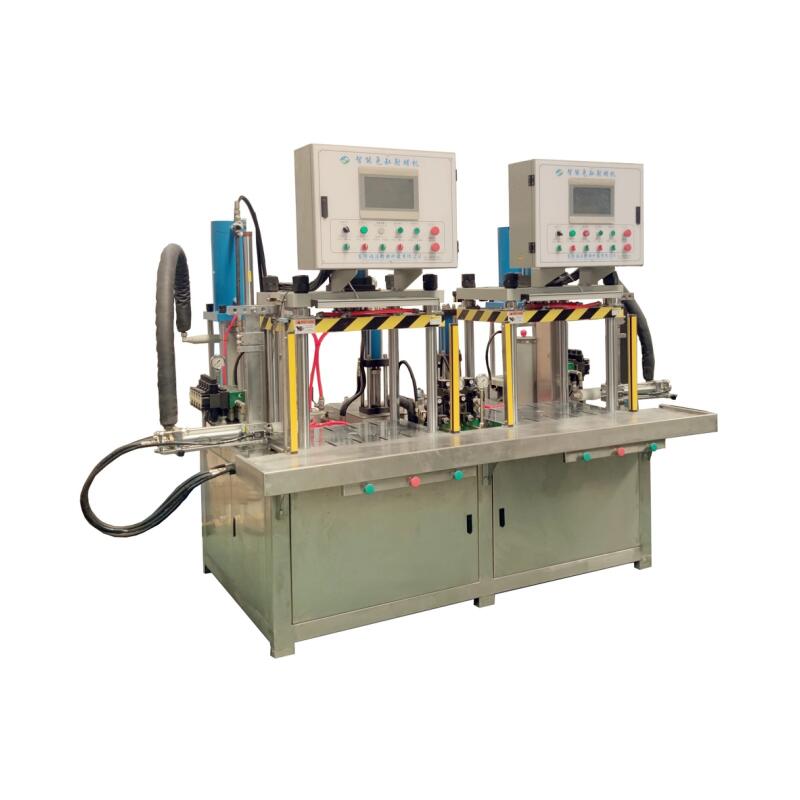
A Wax Injection Machine is equipment used to inject molten wax into a casting mold to form a precise wax pattern. In the investment casting process, this wax pattern becomes the basis for the ceramic shell and subsequent metal casting, which means dimensional variation at the wax stage can influence the final component.
The basic process involves preparing the wax, setting the required process parameters, positioning the mold, injecting wax under controlled pressure, allowing the pattern to stabilize, and removing the completed wax pattern. Each stage needs to remain consistent when the same component is produced repeatedly.
For this reason, we regard temperature and pressure stability as two of the most important performance factors. If the wax temperature changes significantly between cycles, its flow behavior and shrinkage can also change, making it more difficult to maintain consistent wax pattern dimensions.
Precision begins with repeatability. A good Wax Injection Machine keeps the main process conditions stable so that each wax pattern is produced under nearly identical conditions. This reduces variation before the ceramic shell and metal casting stages even begin.
| Machine Control | Effect on Wax Pattern Quality |
|---|---|
| Wax Temperature | Stable temperature helps maintain consistent wax flow and reduces variation caused by temperature changes. |
| Injection Pressure | Controlled and adjustable pressure supports consistent filling of the mold cavity. |
| Injection Time | Repeatable timing helps maintain consistency between production cycles. |
| Mold Handling | Stable mold positioning and handling reduce errors during repeated wax pattern production. |
| PLC Control | Digitized process parameters help operators reproduce established production conditions. |
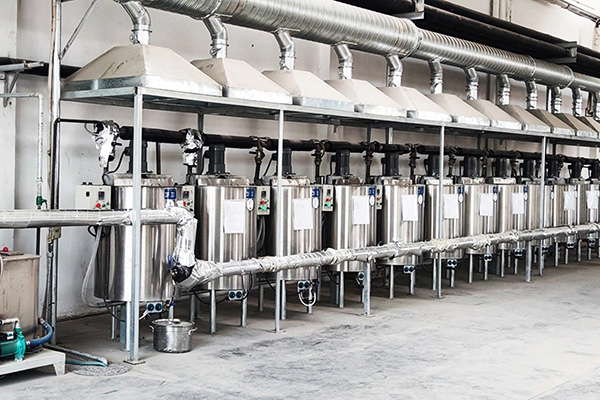
Wax temperature has a direct relationship with the injection process. If the temperature is too high or too low, the wax may not behave in the same way during filling and cooling. This can influence filling quality, shrinkage, surface condition, and dimensional consistency.
At Jar Hing, our equipment is designed to control wax temperature fluctuations within ±0.5℃. We consider this stability particularly important when manufacturers need to produce large quantities of the same wax pattern and maintain consistent dimensional results from the beginning of a production run to the end.
For investment casting manufacturers, this also makes process adjustment easier. Once the appropriate temperature and pressure parameters have been established for a particular wax and mold, operators can use the machine settings as a repeatable production reference.
Injection pressure determines how the wax enters and fills the mold cavity. The required pressure depends on factors such as mold structure, wax characteristics, pattern geometry, and production conditions, so there is no single pressure setting suitable for every investment casting application.
We therefore design our machines with stable and adjustable injection pressure. This allows the process to be adapted to different molds and product requirements instead of forcing manufacturers to use one fixed setting for every wax pattern.
For complex patterns with narrow sections or detailed geometries, controlled injection conditions become particularly important. Consistent filling helps reduce differences between individual wax patterns and provides a more reliable starting point for the following investment casting stages.
Different investment casting factories have different production volumes, mold structures, and automation requirements. We currently provide four main types of Wax Injection Machine to cover small-scale production, higher-efficiency manufacturing, automated production, and customized applications.
| Machine Type | Main Application | Key Characteristic |
|---|---|---|
| Single-Station Wax Injection Machine | Small production volumes and relatively fixed product types. | Practical operation, straightforward maintenance, and cost-effective production. |
| Double-Station 16T Wax Injection Machine | Manufacturers requiring improved production efficiency. | Allows injection and preparation work to be performed at two stations with reduced waiting time. |
| Fully Automatic Wax Injection Machine | Large-scale manufacturers pursuing automation and repeatability. | Integrates automatic feeding, injection, and robotic mold removal with PLC control. |
| Custom-Designed Wax Injection Machine | Special molds, unusual wax materials, large patterns, or unique factory layouts. | Equipment is developed around specific product and process requirements. |
The double-station configuration is designed around a simple production problem: waiting time. With a conventional single-station process, the operator may need to wait for the injection cycle before preparing the next mold. A double-station design provides an opportunity to perform preparation work while another station is completing the injection process.
Our double-station 16T Wax Injection Machine is designed so that injection can take place at one station while the operator prepares the other station. Tasks can include mold cleaning, applying release agent, and positioning cores. After the injection cycle is completed, the workbench rotates and the two stations change roles.
According to our product information, this configuration can increase equipment utilization by more than 80%. The practical benefit is not simply faster machine movement; it is the reduction of idle operator and equipment time within each production cycle.
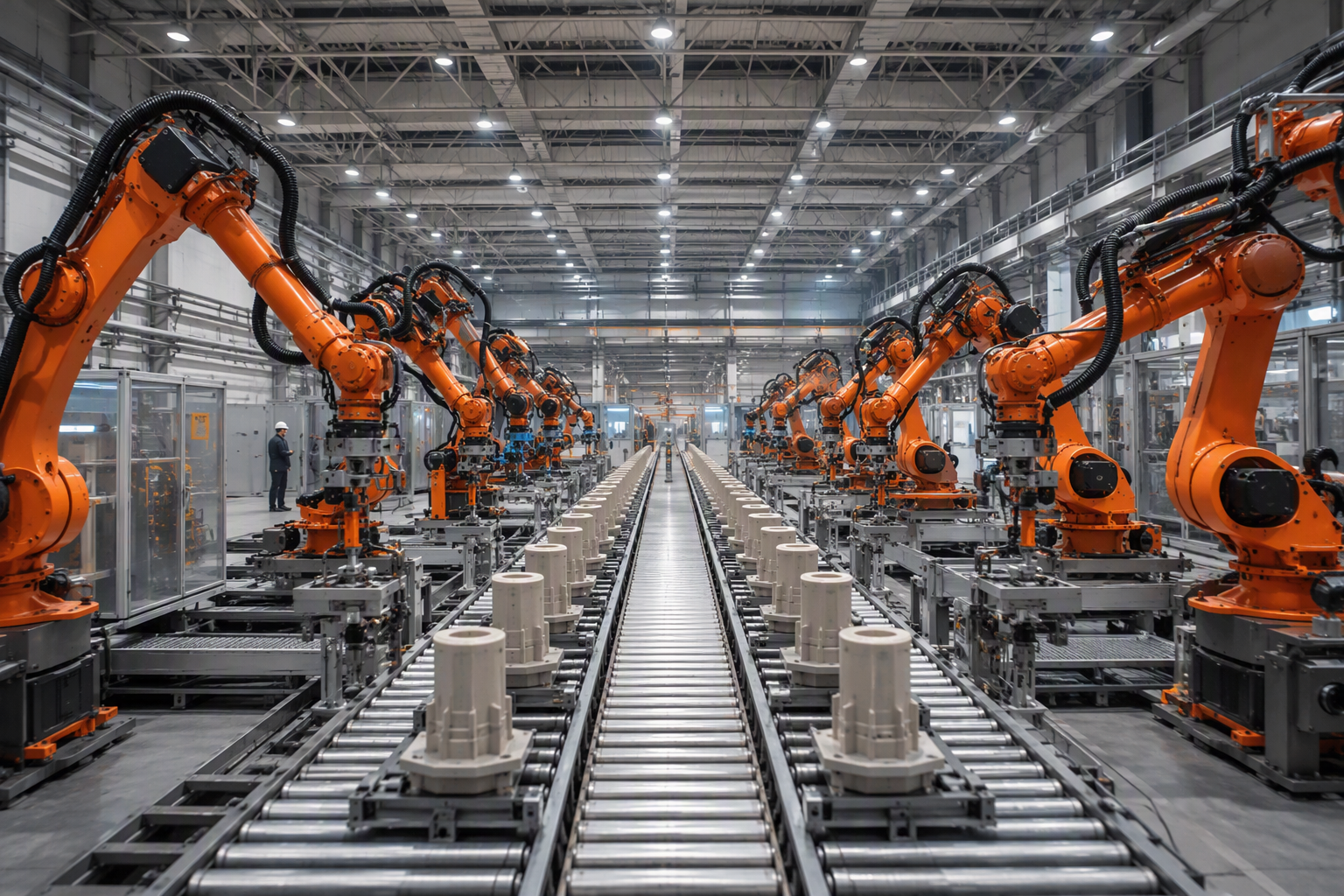
A fully automatic machine is more appropriate when production volume, consistency, and labor efficiency are major concerns. Jar Hing's intelligent fully automatic model integrates automatic feeding, precise injection, and robotic mold removal to reduce manual intervention throughout the process.
The machine uses a PLC control system to digitize key process parameters including temperature, pressure, and time. This provides a more structured way to reproduce established process conditions and is particularly useful for manufacturers producing large quantities of the same or similar wax patterns.
For high-volume investment casting, automation can also help reduce differences caused by operator handling. The objective is to make the production process more repeatable so that the quality of early production pieces can remain consistent with later production pieces.
Standard equipment cannot always accommodate every investment casting project. Some manufacturers work with extra-large wax molds, special low-temperature waxes, unusual pattern geometries, or factory layouts that limit the available installation space.
In these situations, customized equipment can be more practical than modifying a standard machine after delivery. Our engineering team evaluates the product characteristics, mold structure, wax requirements, production process, and installation conditions before developing a dedicated solution.
This approach is particularly useful for manufacturers with specialized investment casting processes. Instead of selecting equipment based only on general specifications, the machine can be developed around the actual production requirements.
We recommend evaluating the complete production process before selecting equipment. Machine capacity is important, but it should not be the only purchasing criterion. The wax material, mold structure, production volume, required precision, automation level, factory layout, and maintenance requirements all affect the final choice.
| Selection Factor | What to Consider |
|---|---|
| Production Volume | Determine whether the equipment will be used for small batches, regular production, or large-scale manufacturing. |
| Wax Material | Confirm the operating characteristics and temperature requirements of the wax used in production. |
| Mold Structure | Consider mold dimensions, pattern geometry, cores, and filling requirements. |
| Precision Requirements | Evaluate temperature, pressure, and process repeatability required for the target wax pattern. |
| Automation Level | Choose between manual, double-station, and fully automatic operation according to production needs. |
| Factory Layout | Confirm that machine dimensions and workflow are compatible with the available production area. |
| After-Sales Support | Consider technical support, operation guidance, maintenance assistance, and communication capability. |
For investment casting equipment, reliability is important because unexpected machine downtime can interrupt the entire production sequence. We therefore place emphasis on testing before equipment leaves our factory.
Our Wax Injection Machines undergo a continuous 72-hour full-load test before shipment. The purpose is to simulate demanding production conditions and identify potential equipment problems before the machine reaches the customer's factory.
Core components, including temperature control modules and pressure sensors, are selected from internationally recognized brands. Combined with our production and quality management procedures, this testing approach is intended to improve equipment stability during long-term operation.
Energy consumption is another practical consideration for investment casting manufacturers, particularly when machines operate for long production hours. Heating systems need to maintain the required wax temperature while avoiding unnecessary energy loss during operation and standby periods.
Jar Hing uses optimized insulation, high-efficiency heating elements, and intelligent standby programs in its equipment. According to our product data, these measures can reduce energy consumption by more than 30% compared with similar products on the market.
For factories running multiple machines, even a moderate reduction in energy consumption can become meaningful over a long production period. We therefore recommend considering operating efficiency together with purchase price when evaluating the total cost of equipment ownership.
Jar Hing has been engaged in the investment casting field since 2012 and has accumulated 13 years of experience in Wax Injection Machine manufacturing and related equipment solutions. Our products have been supplied to 88 clients in 35 countries, including customers in the United States, Canada, Japan, Australia, Turkey, and Chile.
We operate with an ISO 9001 quality management system and have certifications from international organizations including SGS and BV. These systems support our focus on consistent manufacturing, equipment testing, and quality control.
Our product range covers single-station machines, double-station 16T machines, fully automatic wax injection systems, and custom-designed equipment. This allows us to work with investment casting manufacturers at different production stages rather than offering only one standard machine configuration.
Jar Hing Products Co., Ltd. also provides precision casting parts and related services for industries including automotive, construction, furniture, medical, food, electrical, and renewable energy applications. Our experience in both equipment and precision casting gives us a practical understanding of the relationship between wax pattern production and downstream casting requirements.
A Wax Injection Machine injects molten wax into a mold to produce wax patterns used in the investment casting process.
Stable wax temperature helps maintain consistent flow and shrinkage characteristics, which supports more repeatable wax pattern dimensions.
Jar Hing equipment can control wax temperature fluctuations within ±0.5℃, while injection pressure is stable and adjustable according to production requirements.
A double-station machine allows injection work and mold preparation to take place at different stations, reducing waiting time and improving equipment utilization.
The double-station 16T model is designed for higher-efficiency production where operators need to prepare one mold while injection is taking place at the other station.
A fully automatic model is suitable for large-scale manufacturers that prioritize automation, production efficiency, and consistent process control.
Yes. Jar Hing provides dedicated equipment for requirements such as large wax molds, special wax materials, unusual production layouts, and other customized applications.
Each machine undergoes a continuous 72-hour full-load test before leaving the factory to evaluate stability under demanding operating conditions.
Consider production volume, wax type, mold structure, precision requirements, automation level, factory layout, energy consumption, and technical support before selecting the machine.
Investment casting equipment can support precision component production for automotive, construction, furniture, medical, food, electrical, renewable energy, and other industrial applications.
A Wax Injection Machine improves precision in investment casting by creating a more stable and repeatable wax pattern production process. Accurate temperature control, adjustable injection pressure, repeatable cycle parameters, reliable mold handling, and appropriate automation all contribute to reducing variation before the casting stage.
The right machine depends on the production environment. A single-station machine can be practical for smaller production volumes, while a double-station 16T model can reduce waiting time for higher-efficiency operations. Large manufacturers may benefit from fully automatic control, while specialized molds and unusual production conditions may require customized equipment.
With 13 years of investment casting experience, international customers in 35 countries, ISO 9001 certification, SGS and BV certification, and multiple Wax Injection Machine configurations, Jar Hing provides equipment solutions focused on precision, repeatability, efficiency, and long-term production reliability.
-